
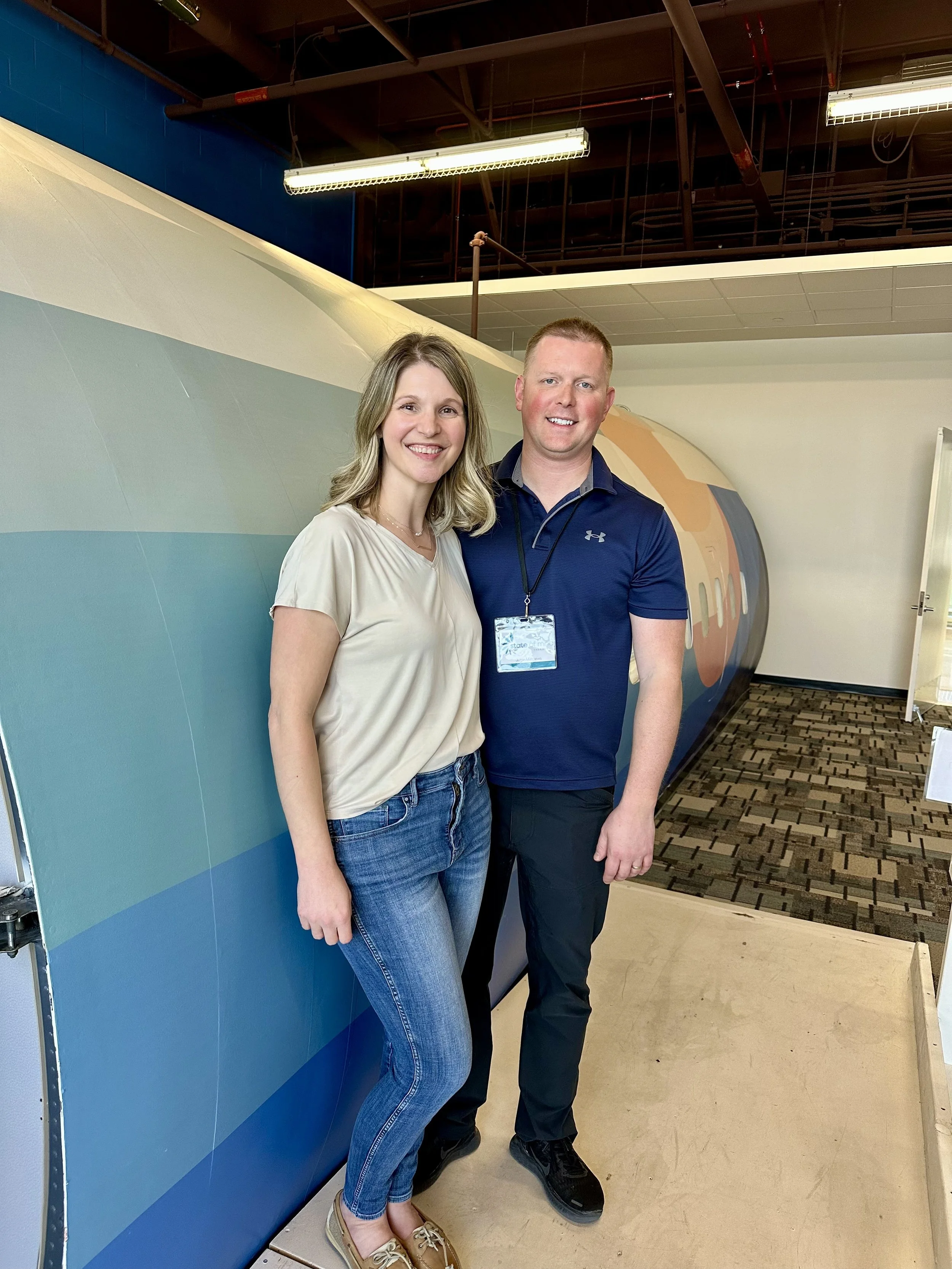
Inside Our MSP Airport Workshop: What Progress with Flight Anxiety Really Looks Like
When most people imagine someone struggling with flight anxiety, they picture obvious panic.
Shaking hands. Tears. Someone refusing to board the plane.
But after hosting another one of our fear of flying workshops at MSP Airport, we were reminded again that flight anxiety often looks much different than people expect.
Sometimes it looks like taking photos from the parking ramp because simply arriving at the airport feels overwhelming and stressful.
Sometimes it looks like noticing your anxiety rise while going through security or riding the tram.
Sometimes it looks like sitting on the plane with your eyes closed, grounding yourself while nobody around you realizes how hard you’re working internally.
And sometimes, it looks like showing up even though part of you still doubts whether flying will ever feel easier.
One of the most meaningful things about our MSP Airport Workshop is that people don’t have to hide those experiences. They get to practice being in the airport environment alongside other people who understand exactly what it feels like to fear flying.
And over and over again, we see the same important truth:
Progress with flight anxiety rarely looks perfect or linear.
The Biggest Misunderstanding About Flight Anxiety
Many people come to our workshop believing they need to figure out how to feel calm before they’ll be able to fly.
They think the goal is to eliminate anxiety, stop the physical sensations, or finally “logic” themselves out of fear.
But that’s usually not how progress actually works.
Instead, we help people learn how to respond differently to anxiety when it shows up.
Because anxiety itself is not the problem.
The problem is often what anxiety convinces people to do next:
avoid
escape
over-monitor sensations
seek reassurance
mentally fight with fear
decide anxiety means they can’t handle flying
At our workshop, people get the opportunity to practice staying engaged with the experience instead of automatically retreating from it.
That doesn’t mean anyone does it perfectly or without fear. But learning how to respond differently is what it’s all about.
One Attendee’s Experience: Stepping Off the Plane…Then Trying Again
During our recent workshop, we closed the aircraft doors for part of the experience so attendees could practice sitting with that part of flying if they chose to.
One attendee decided to step off the plane once the doors closed.
There was no pressure or judgment around that decision. In fact, part of the workshop is recognizing that everyone’s fear shows up differently.
As we talked afterward, she shared concerns about an upcoming flight and worries about how panic might affect her ability to travel again.
At one point, the conversation shifted toward the idea of taking future “practice flights.”
But instead of jumping several steps ahead, we gently brought the focus back to the present moment:
What if the practice could simply be trying again right now?
Not deciding about future flights or feeling calm. But taking one small step, right now, to get back on the plane and sit. Even if it’s just for one minute.
She was hesitant, but willing.
Eventually, she chose to re-board and remain on the aircraft while the doors were closed.
It wasn’t because the fear suddenly disappeared.
In fact, it was clear she still felt uncomfortable. At one point, she stood near the fan for cool air while working through the physical sensations that had surfaced for her.
For her, progress was getting back on the plane and allowing herself to feel the panic even though she initially didn’t want to.
Sometimes progress is simply staying a little longer than you did before.
Why Repeat Attendees Matter
One of the most encouraging parts of this workshop was seeing several repeat attendees return.
For some people, attending once is enough to help them feel more prepared to fly again.
For others, the workshop becomes something they revisit before upcoming trips as a way to refresh skills, rebuild confidence, and practice being back in the airport environment.
One attendee shared that this was the third time she had attended the workshop.
And this time, while sitting on the plane, she rated her anxiety as only a 3 out of 10 — the lowest it had ever been for her during the workshop experience.
What made that moment especially meaningful was remembering where she started.
During her very first workshop, getting onto the aircraft itself felt incredibly difficult. She needed time to pause, ground herself, and work up to boarding.
This time it looked different.
She still used grounding strategies.
She still closed her eyes at moments.
She still practiced responding intentionally to anxiety.
But she stayed engaged with the experience in a way that once felt much harder for her.
By the end of the workshop, she shared that she finally felt ready to book a flight.
Not because all fear had disappeared, but because she trusted herself more in the presence of anxiety.
That’s the kind of progress we care about most.
Sometimes the Hardest Part Isn’t the Plane
One attendee shared something surprising in their feedback after the workshop:
They expected sitting on the plane to be the hardest part. Instead, they noticed more anxiety while going through airport security.
Experiences like this are important because they remind people that flight anxiety is often much bigger than turbulence or being in the air.
For many fearful flyers, anxiety begins long before takeoff:
parking at the airport
entering the terminal
seeing security lines
hearing gate announcements
walking toward the aircraft
That’s part of why practicing in the actual airport environment can feel so valuable for attendees.
They’re not just imagining the experience from home.
They’re walking through it step-by-step while learning how to respond differently along the way.
The Power of Feeling Seen
Another theme we heard repeatedly throughout the workshop was how meaningful it felt to be around other people who truly understood.
One attendee shared that she was shocked by how many people raised their hands when discussing fear of having a panic attack on a plane.
For years, she thought she was one of the only people struggling with that fear.
Another repeat attendee shared that one of the most helpful parts of returning to the workshop each time is simply seeing other people “like him” in the room.
That sense of connection matters more than people realize.
Because many fearful flyers spend years believing:
everyone else flies easily
they’re overreacting
they should be able to “just get over it”
something is wrong with them for struggling
But flight anxiety is incredibly common.
And for many people, the fear is not actually about the plane crashing.
It’s about:
feeling trapped
panicking in public
losing control
not being able to escape uncomfortable sensations
When people realize others share those same fears, shame often begins to loosen its grip.
We Don’t Measure Success by Calm
One of the most important things we teach during our MSP Airport Workshop is this:
Success is not measured by whether you feel calm.
Success might look like:
realizing anxiety can rise without needing to immediately escape it
discovering you can stay engaged even while uncomfortable
learning that panic sensation feel more manageable than you thought
noticing your anxiety decreases over time with repeated practice
becoming more willing to experience uncertainty in order to keep moving toward your travel goals
recognizing that anxiety and capability can exist at the same time
Fearful flyers often assume they need to wait until anxiety disappears before moving forward.But many people discover something different:
Confidence is often built through practicing movement with discomfort present — not waiting for discomfort to fully disappear first.
That’s why we don’t expect attendees to be fearless.
We simply want them to leave with:
more understanding
more tools
more willingness
more confidence in their ability to respond differently when anxiety shows up
And for many people, that becomes the beginning of real change.
Looking Ahead
Since the workshop, several attendees have continued practicing flying and sharing updates with us on their progress.
Moments like that are incredibly meaningful to witness. Because people begin reconnecting with places, opportunities, and experiences that fear had started to shrink.
If you struggle with flight anxiety, you are not the only one.
And finding success to fly doesn’t happen overnight. But if you have willingness, community support, and the right tools, then it’s absolutely possible for you.
Interested in Our MSP Airport Workshop?
Our fear of flying workshop at MSP Airport is designed to help people better understand flight anxiety, practice responding differently to fear, and experience the airport environment alongside others who truly get it.
You can learn more about the workshop and join the waitlist for future events here.

Overcoming Flight Anxiety When Claustrophobia Takes Control
You've booked your dream vacation, the destination is perfect, and the itinerary is exciting. But then, reality hits you—the thought of getting on that plane sends a rush of fear through your body.
The idea of being trapped, the doors shutting, and not being able to get out makes you feel like canceling the whole trip.
If this sounds familiar, you're not alone. Many people struggle with flight anxiety related to claustrophobia. But the good news is, there are ways to manage this fear and take back control.
Understanding Claustrophobia in the Context of Flying
It’s often misunderstood that fearful flyers are worried about the plane crashing. But there are many other reasons people fear flying.
One reason is claustrophobia, or the fear of being trapped in small spaces. For some, the fear rushes in the moment the doors close and there's no way out.
Others fear being held on the tarmac for hours. The thought of being confined without control over their environment can lead to an overwhelming sense of panic. Or maybe you worry about losing control of yourself and doing something embarrassing on the flight.
If you are looking for support while flying with Claustrophobia, it’s important to know that there are “in the moment” tips for flying and longer-term strategies that can help you become less fearful in small spaces (like flying). This blog will cover examples of both.
Mental Preparation
1. Reframe Your Thoughts: Stop telling yourself that you are stuck on this plane or trapped. Remember, you are CHOOSING to go on this flight. When the plane doors close, think of it as the step to getting where you need to go, not confinement.
2. Bust the Illusion of Control: In many areas of life, we accept things outside our control without much thought. Accepting that you don’t have to control everything can reduce the pressure you put on yourself and help manage your anxiety.
In-Flight Tips
1. Book an Aisle Seat: Having an aisle seat can provide a sense of space and control, making it easier to move around and lessening the feeling of being trapped.
2. Shift Your Perception of Space: Notice the space you do have on the plane. Notice the openness of the aisle, the space around your seat, and the environment outside the window. On a plane, you are free to move around….unlike in a car.
3. Controlled Breathing: Practice deep breathing exercises to calm your nervous system. Inhale slowly through your nose, hold for a few seconds, and exhale through your mouth.
Face Your Fear of Claustrophobia with Exposure
The most effective way to overcome your fear in the long run is to face your fears in small steps over and over again.
When you repeatedly practice facing your fear, your brain starts to "get used to it" and stops firing off the danger alarm. It will start to recognize flying as low risk and stop trying to warn you of danger.
One of the challenges with exposure and flight anxiety is that many people don't fly frequently enough, so that can make it more challenging to practice.
And it doesn't help that flying is expensive, which can keep people from practicing frequently. However, there are ways around this, and working with a professional can help design exposure exercises that can be done even without buying a plane ticket.
Sample Exposures for Fear of Feeling Trapped
Spend time in small, enclosed spaces like a bathroom stall or elevator.
Sit in the back seat of a car for a short drive.
Practice closing the door and staying in a room for a set period.
Take short flights, gradually increasing the duration.
These are just a few examples of exposures. A therapist trained in exposure therapy will help create a personalized exposure menu that targets the right activities and guides the pace for the best results.
Conclusion
Flight anxiety related to claustrophobia can feel overwhelming, but with the right strategies and support, you can manage it effectively. Remember, you're not alone and you don’t have to figure this out on your own. Therapists trained in CBT and exposure therapy can provide personalized guidance to help you overcome your fear.
Need More Support With Your Fear of Flying?
If the fear of feeling trapped is making you dread your next flight—or consider canceling it altogether—know that there’s a way forward.
Inside my online course, Fearful Flyers Blueprint, I walk you step-by-step through exactly how to manage panic, shift your attention, and retrain your brain so flying doesn’t feel like a trap. You’ll learn how to handle that moment when the doors close—without spiraling.